Gutters and Downspouts
Gutters and Downspouts in Elgin, IL
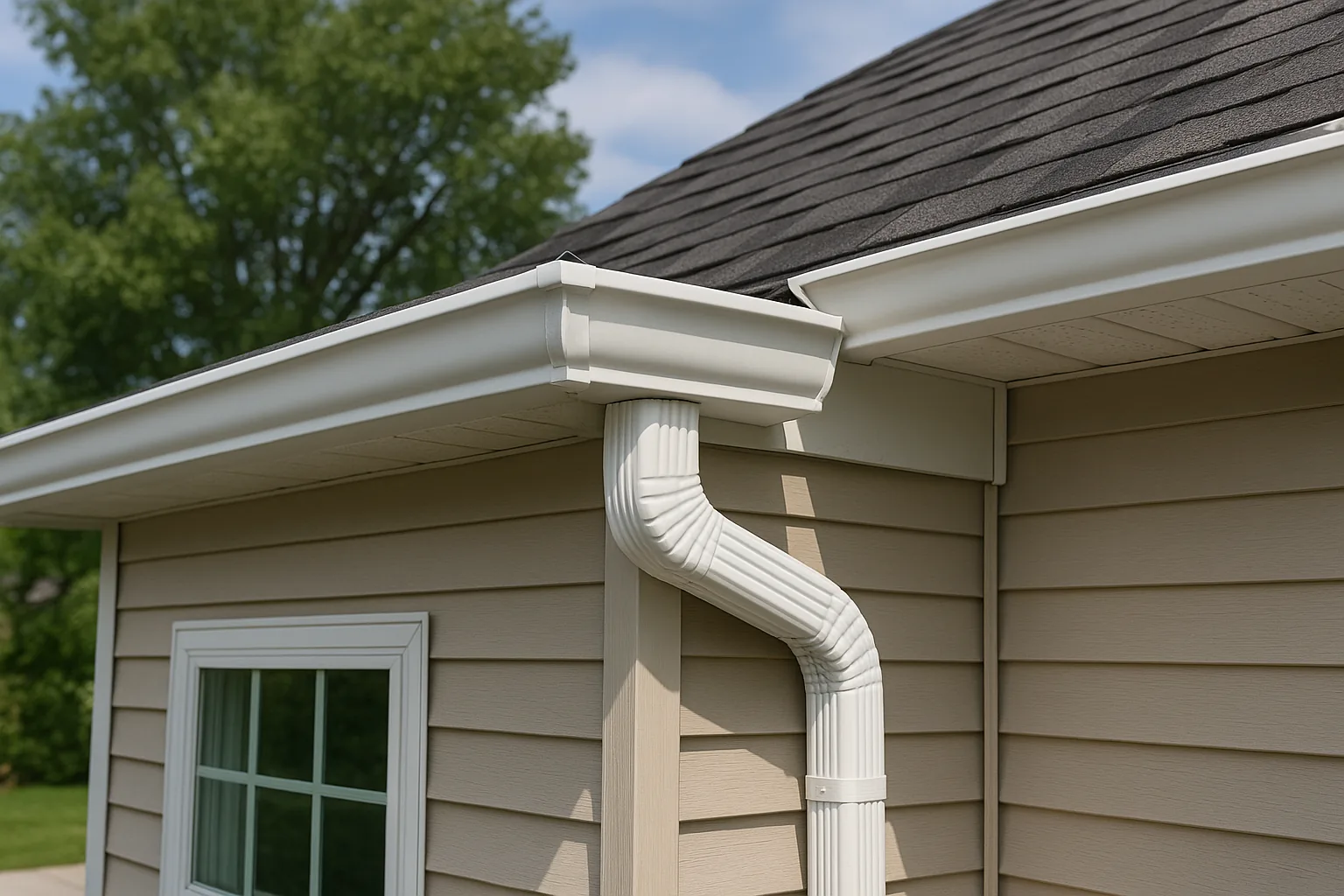
Protecting your home starts at the roofline. Quality gutters and properly routed downspouts move water away from your foundation, siding, and landscaping, especially during Elgin’s heavy spring rains and freeze–thaw cycles. If you’re considering gutter installation in Elgin, thoughtful material choices and layout make all the difference for long-term performance.
Why Start With Gutters and Downspouts
Foundation Protection
Properly sized gutters and downspouts move water away from your home.
Seasonal Guidance
Guard against Elgin's heavy fall leaf debris and winter ice dams.
Style Options
Seamless K-style and half-round options for historic properties.
Gutter Styles and Materials
Your home’s architecture and tree cover should guide your gutter selection. K-style gutters offer strong capacity with a crisp, modern profile, while half-round gutters complement historic and traditional homes found throughout Elgin’s established neighborhoods. For most homes, 5-inch systems work well; larger roofs or steep pitches may benefit from 6-inch gutters for added flow during downpours. Aluminum is a popular, low-maintenance choice that resists rust and is available in many colors to match trim. Steel adds durability where impacts are a concern, and copper delivers a distinctive look that patinas over time. Seamless aluminum gutters formed on-site minimize joints, reducing leak points and improving curb appeal. During gutter installation in Elgin, we size and slope runs to keep water moving and help prevent standing debris.
Gutter Guards
Gutter guards can cut down on cleaning and reduce clogs from maple seeds, oak leaves, and pine needles common in the Fox Valley. Screen, micro-mesh, and reverse-curve styles each have strengths: screens are budget-friendly, micro-mesh blocks fine debris, and reverse-curve designs shed leaves over the edge. The right guard depends on your roof type, debris profile, and maintenance preferences. We fit guards to your exact gutter system to avoid lifting shingles or restricting water flow, and we verify that valleys and inside corners—where water volume spikes—receive compatible protection.
Downspout Placement and Sizing
Strategic downspout layout prevents overflows at roof valleys and long gutter runs. As a rule of thumb, plan at least one downspout for every 30–40 linear feet of gutter, with additional outlets at high-collection areas. Larger 3×4-inch downspouts move more water and resist clogging better than smaller profiles, which can be critical during Elgin cloudbursts. Extensions, splash blocks, or buried drain lines should discharge water several feet from the foundation and away from walkways and driveways. We also consider landscaping grades, sidewalks, and basement window wells to route water safely without creating icy spots or erosion.
Ice Dam Prevention
Elgin winters bring snow loads and freeze–thaw cycles that can create ice dams along eaves. While proper attic insulation and ventilation are the foundation of prevention, gutter design helps manage meltwater. Adequate pitch, larger outlets, and clear downspouts reduce standing water that can refreeze at the edge. In problem areas, adding heat cable at gutters and downspouts can keep channels open during prolonged cold snaps. We also pay special attention to north-facing eaves and low-slope sections, reinforcing these runs and ensuring that guards and hangers won’t trap ice or impede flow.
How It Works
Request Your Free Estimate
Describe your roofing issue or project and the best way to reach you.
Get an Inspection
A roofer inspects the roof, or reviews your photos, and confirms the scope of work.
Review a Written Estimate
Compare a clear, line-item estimate before you agree to anything.
Schedule the Work
Confirm a timeline that works for your schedule and the weather.
Frequently Asked Questions
How often should gutters be cleaned in Elgin?
At least twice a year — spring and fall — is typical, more often with heavy tree cover.
Do gutter guards eliminate the need for cleaning?
No — they reduce debris buildup but still need periodic checks, especially after storms.
Request Your Free Roofing Estimate
Describe your roofing issue or project and get a free, no-obligation estimate.